AI/ML-Assisted Computational Materials Design
Developing predictive workflows that use machine learning and molecular descriptors to guide optoelectronic materials design.
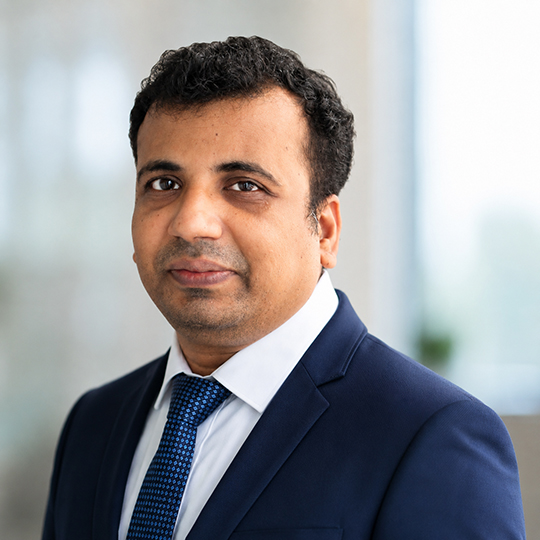
Research Supervisor & Principal Investigator
Leading AI/ML-assisted materials discovery, quantum-chemical simulations, excited-state engineering, and next-generation OLED research at KL University (Deemed to be University).
I am an Assistant Professor in the Department of Chemistry, building a research programme at the interface of computational design, molecular photophysics, and optoelectronic materials. My training spans IISER Bhopal, IISc Bengaluru, the University of Electro-Communications in Tokyo, and the Indian Association for the Cultivation of Science.
At AURA Lab, we combine materials informatics, quantum chemistry, spectroscopy, and device-oriented analysis to discover high-performance organic emitters and semiconductor materials for advanced light-emitting technologies.
The Research Group
AURA Lab studies how predictive modelling, excited-state control, and data-driven discovery can accelerate the design of efficient organic emitters and semiconductor materials. Our work connects theory-guided molecular design to radiative decay engineering, triplet management, and device-level performance in modern optoelectronics.
Developing predictive workflows that use machine learning and molecular descriptors to guide optoelectronic materials design.
Using quantum chemistry to map excited states, charge-transfer pathways, and radiative or non-radiative processes in emissive systems.
Combining curated datasets, computational screening, and design rules to identify next-generation organic semiconductor candidates.
Controlling molecular vibrations and excited-state relaxation pathways to enhance radiative output and emissive efficiency.
Designing host–guest and donor–acceptor systems that improve triplet harvesting, energy transfer, and device stability.
Exploring emissive architectures for hyperphosphorescent OLEDs with improved colour quality, efficiency, and low roll-off.
Joined the Department of Chemistry at KL University (Deemed to be University) as Assistant Professor and established the AURA Lab.
Published new work in J. Phys. Chem. Lett. on synchronizing the nπ* transition dipole in a benzoyl-linked N-fused ring for highly efficient yellow afterglow.
Expanded research direction toward AI-guided materials screening, data-driven discovery, and advanced OLED design workflows.
Returned to India as a Research Associate at the Indian Association for the Cultivation of Science (IACS), Kolkata.
Highlighted Records
2025
J. Phys. Chem. Lett. 2025, 16, 3904–3910
View article ›2025
J. Mater. Chem. C, 2025
View article ›2024
Adv. Sci. 2024, 11, 2308897
View article ›Join the Team
I welcome motivated PhD candidates, Master's students, project interns, and postdoctoral researchers interested in molecular modelling, excited-state engineering, spectroscopy, and next-generation OLED materials.