
Current research focus
AI/ML-assisted computational materials design, quantum-chemical modelling, data-driven discovery, excited-state control, triplet management, and hyperphosphorescent OLED technologies.
Profile
Assistant Professor in the Department of Chemistry at KL University (Deemed to be University). Current research spans AI/ML-assisted computational materials design, quantum-chemical simulations, data-driven discovery of organic emitters and semiconductors, excited-state engineering, triplet management, and hyperphosphorescent OLED technologies.
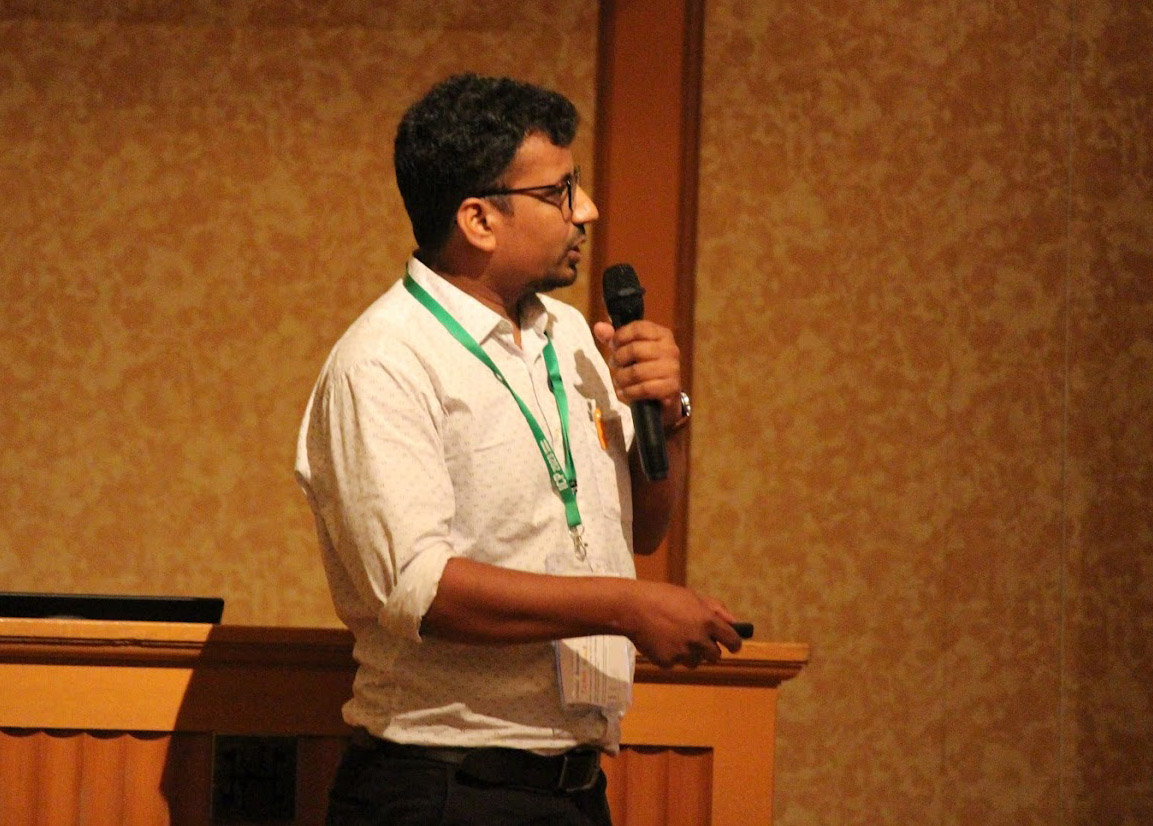
Biography
My scientific curiosity began with a deceptively simple question: why do different materials emit, fade, or store light in different ways? That question has led my research from synthetic chemistry and spectroscopy into computation-guided design for modern optoelectronics.
At AURA Lab, I lead a research programme focused on organic emitters and semiconductor materials for emerging photonic and OLED applications. Our current direction integrates AI/ML-assisted materials design, quantum-chemical simulations, and data-driven molecular discovery with experimental insight into radiative decay, vibrations, excited-state relaxation, and triplet pathways.
Before joining KL University in September 2025, I trained as a UEC Postdoctoral Fellow at the University of Electro-Communications in Tokyo, as a C. V. Raman Postdoctoral Fellow at the Indian Institute of Science in Bengaluru, and as a Research Associate at the Indian Association for the Cultivation of Science in Kolkata. I completed my PhD in Chemistry at IISER Bhopal, where I developed a strong foundation in molecular photophysics and luminescent organic materials.
Academic & Research Trajectory
Sep 2025 — Present
Department of Chemistry, KL University (Deemed to be University), Andhra Pradesh, India
Leads AURA Lab and develops a research programme in AI-guided materials discovery, excited-state engineering, and optoelectronic emitter design.
Feb 2025 — Aug 2025
Indian Association for the Cultivation of Science (IACS), Kolkata, India
Worked on computational materials design for organic semiconductor devices and advanced optoelectronic materials workflows.
Apr 2024 — Jan 2025
University of Electro-Communications, Tokyo, Japan
Expanded research on organic afterglow materials, photophysical control, and device-oriented photonic systems.
Apr 2022 — Mar 2024
University of Electro-Communications, Tokyo, Japan
Focused on afterglow imaging, persistent luminescence, organic materials design, and translation to device settings.
Jan 2021 — Mar 2022
Indian Institute of Science, Bengaluru, India
Worked on purely organic long-lived emissive materials and OLED device fabrication.
Aug 2014 — Dec 2020
IISER Bhopal, India
Doctoral research on multichromophoric organic systems, solid-state emission, and long-lived luminescent materials.
AI/ML-assisted computational materials design, quantum-chemical modelling, data-driven discovery, excited-state control, triplet management, and hyperphosphorescent OLED technologies.
Combining theory, simulations, spectroscopy, electrochemistry, molecular design, and device-level interpretation to build predictive optoelectronic materials frameworks.
Active in the areas of molecular photophysics, organic luminescence, and optoelectronic materials, with experience spanning India and Japan across both experimental and computational platforms.